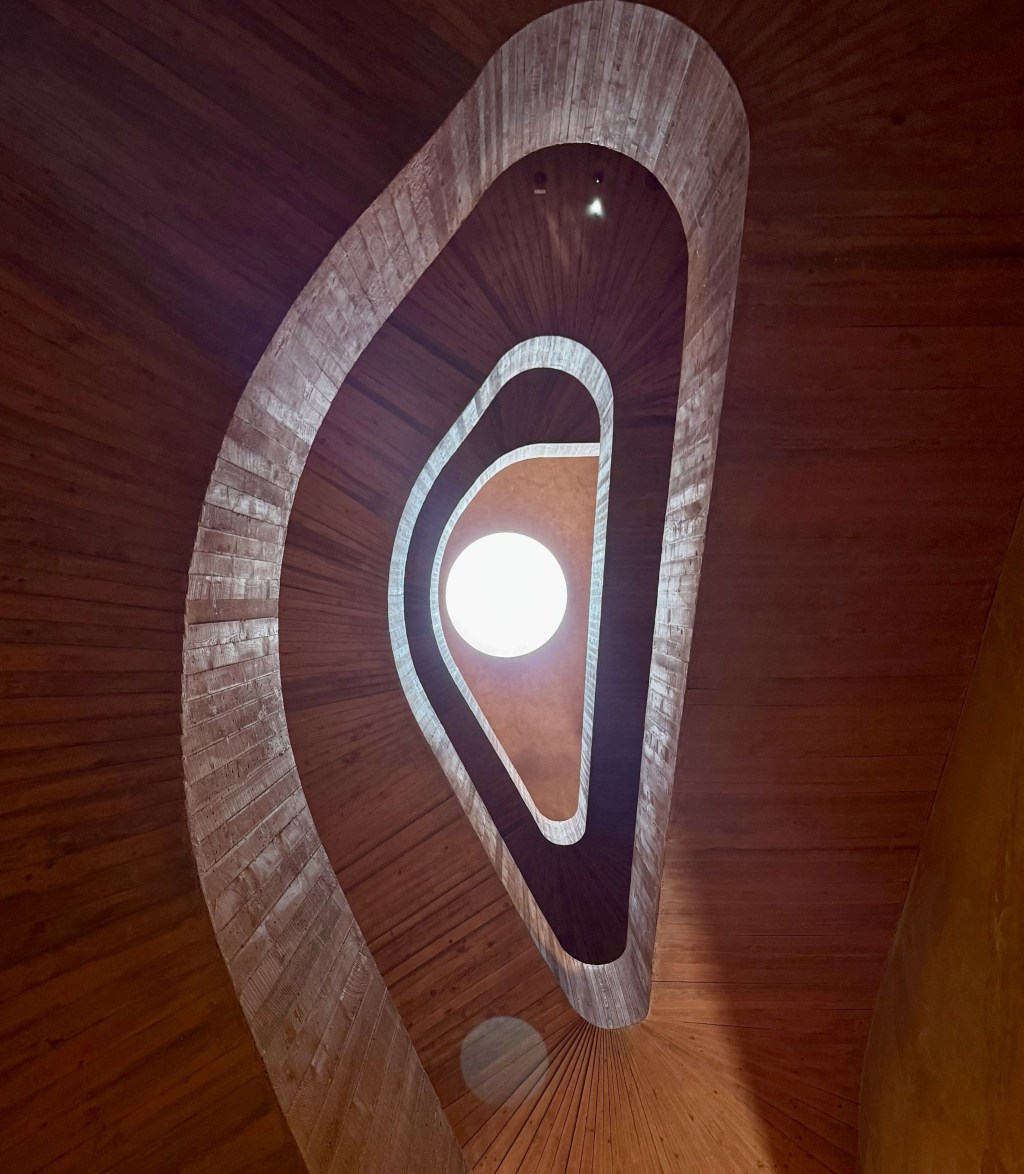
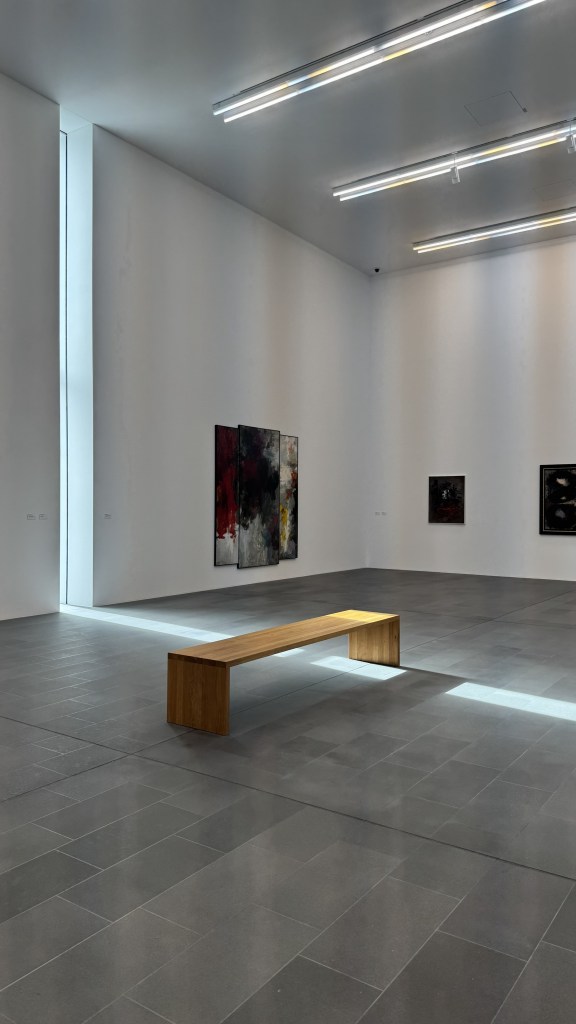
A few weeks ago I went to Küppersmühle in Duisburg – a modern art museum housed in a 19th century industrial monument. The imposing chimneys along with the sheer scale of the façade already created a grand impression before I’d even walked in. I had no particular expectations and yet the visit turned out to be unexpectedly cathartic.
My relationship with museums has shifted considerably since I started taking my practice seriously. My gaze has changed. I now scrutinise works, meaning I come as close as the security line allows, study the texture, the brushstrokes, the direction and speed of movement, and then stand back and take the work in as a whole. I also find myself asking different questions than I used to. Have these artists explored themes that align with mine, or oppose them? Can their work inflect my own, and if so, how? It has become an exercise not just for the eye but for the imagination: to stand in front of a painting and begin to picture my own, to visualise possibilities that arise from looking and then try to carry them back to the studio. I’ve also started approaching works from a more metaphysical angle by trying to understand not just how something was made, but what it is doing, what it wants from the person standing in front of it. As a result, museums have stopped being a pastime and started being part of the work itself. Artists cannot create in a vacuum, and that is something I’ve come to understand only recently (I feel a little embarrassed it took me this long).
Three quotes from the exhibition stayed with me, and I’ve been thinking about them in the days since.
The first was from Georg Meistermann: “art is not about skill, but about expression.” As a perfectionist – and, I’ll admit, a committed procrastinator – I am not naturally one for fast strokes or uncontrolled movements. I am frightened of making mistakes. I keep my hand tight because I trust it more that way, because control feels safer than the alternative. So this quote unsettled me, in the particular way that only something true can. It forced me to ask: what is my expression, actually? When I control every mark, am I painting from within, or am I performing a version of painting that keeps the real thing at a safe distance? Is technical ability a foundation, or is it a wall I hide behind? I don’t have a clean answer. I’m not sure I want one yet. But I notice that the question has followed me home, and that seems to matter.
The second quote was from Emil Schumacher, who wrote that explanations are “completely superfluous” – that when a painting fails to immediately touch the viewer, something is missing, and no amount of words will supply what the work itself didn’t provide. He goes further: when a painting does work, explanation is not only unnecessary but actively diminishing. This one resonated. I have a tendency to explain my paintings: to offer context, to guide interpretation, to try to ensure the viewer arrives somewhere near what I intended. But in doing that, I contaminate the work with my own bias and projections. I close down the very space I’m trying to open. When my friends look at my paintings, they consistently see things I never intended – things that fascinate me precisely because I didn’t put them there consciously, or didn’t know I had. In creating one thing, I created multiple versions of it. That should be the point. That multiplicity of meaning is not a problem to be managed; it is the work succeeding.
The third was from Walter Stöhrer: “I never try to paint something to the very end… so that there is still something left unfinished – as if one could continue to paint.” He described this as a form of respect – for himself, and above all for the viewer, so that they retain their freedom. My instinct is always to finish, to resolve, to bring everything to a clear conclusion. I want the painting ready, the interpretation available, the meaning at least partly legible. Stöhrer’s position is a direct challenge to that impulse, and not a comfortable one. Where is the interest in dictating the gaze of the viewer? Beauty is in the eye of the beholder, and so, ultimately, is the meaning of whatever I make. I will continue to sit with this.
The piece that affected me most – unexpectedly – was a sculpture. I say unexpectedly because I have never felt a strong pull towards sculpture. I think I was always apprehensive about the materiality of stone or bronze, the constraints of the medium, the process that felt like a black box to me from the outside: opaque, slow, unforgiving. Painting, by comparison, feels negotiable. But this particular work stopped me entirely. A solid tubular form that gradually dissipates into the air, its strong core unravelling in what felt like a deliberate act of release. For me it resonated on two levels simultaneously – as a formal choice and as a kind of argument about living. The unravelling didn’t read as collapse or failure. It read as the moment something becomes more honest. There is a version of stability that is really just rigidity, and this sculpture seemed to know that. The solid part holds; the unravelling part flies. I kept returning to it throughout the visit and left thinking about it in a way I hadn’t expected.
Works from the visit:
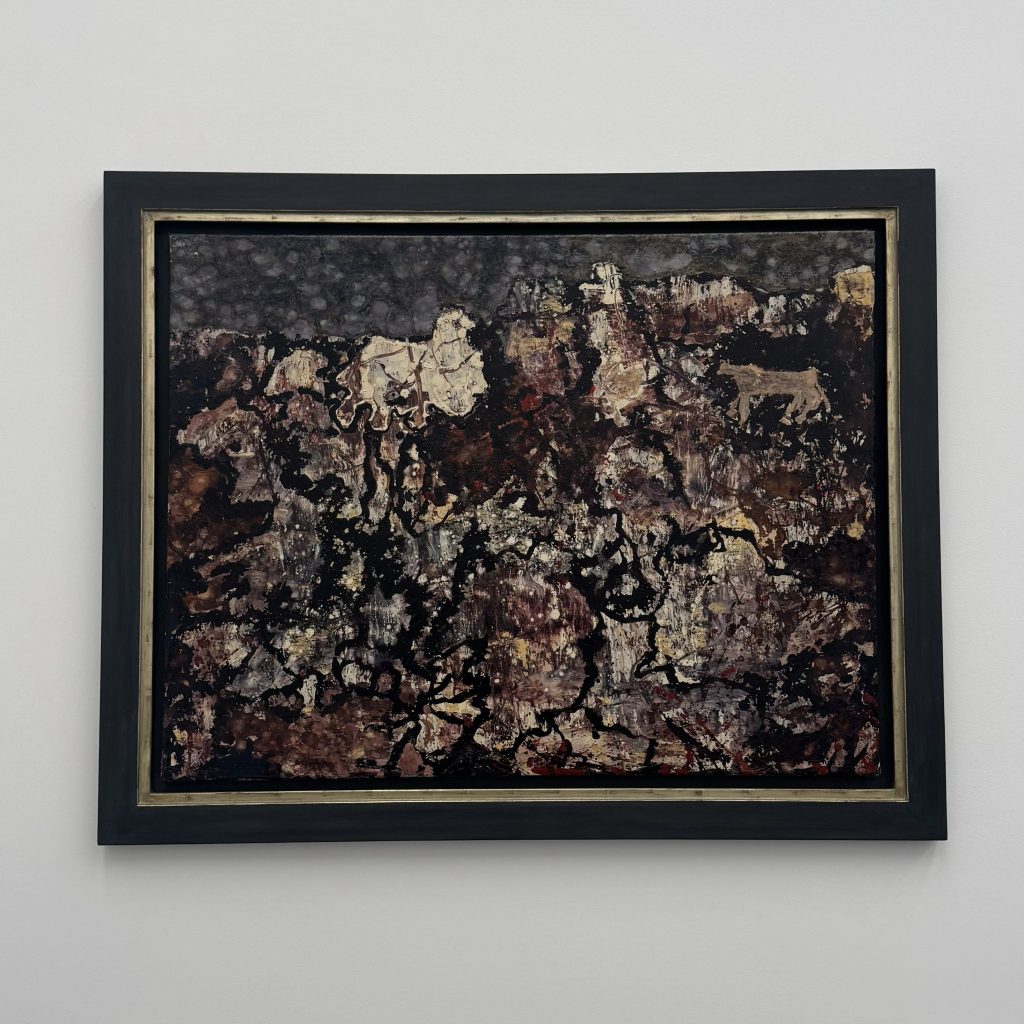
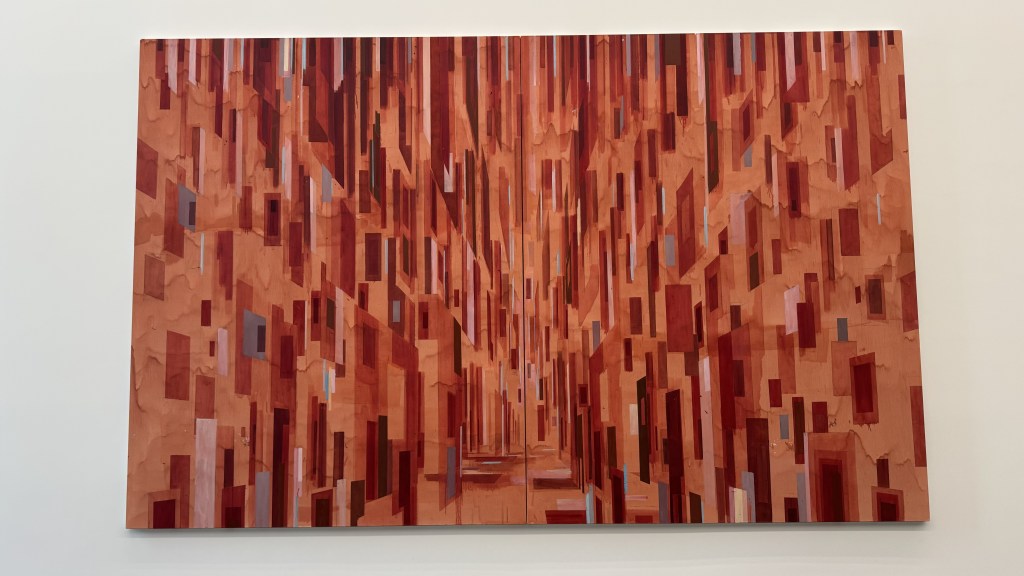
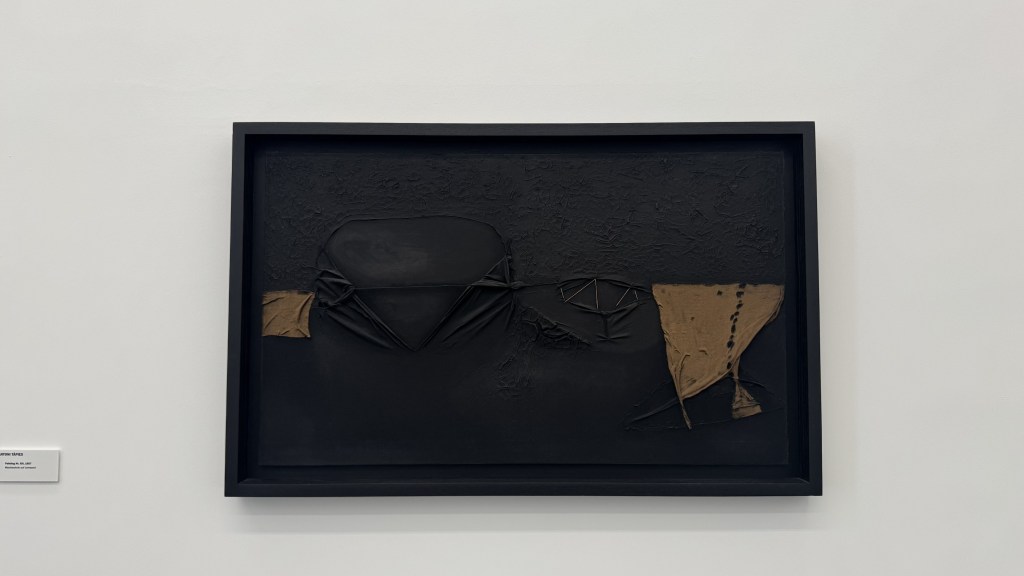
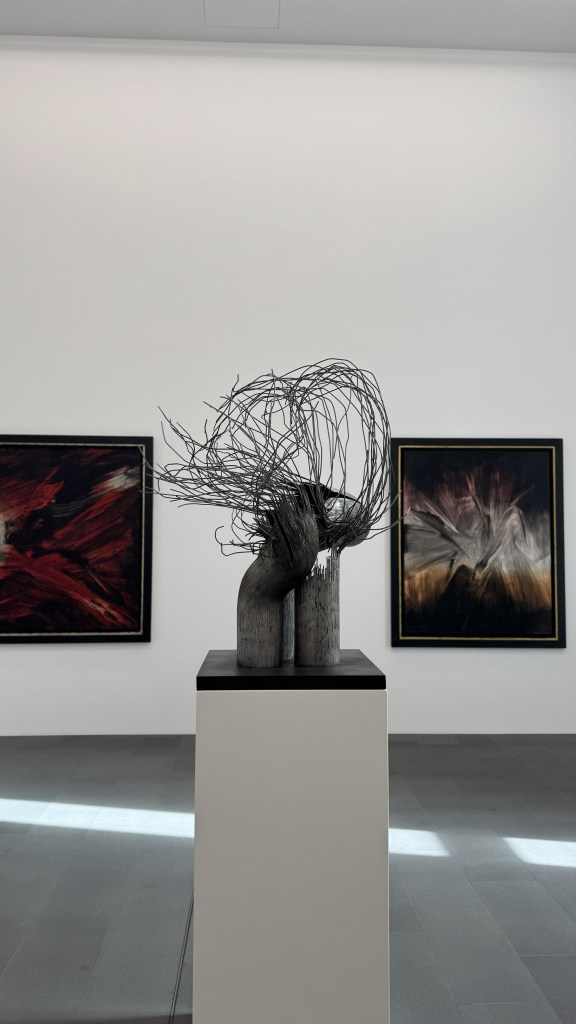
I left Küppersmühle with more questions than I arrived with. I left wondering whether I use technical control as a form of avoidance. I left thinking about what it would mean to guide a viewer rather than instruct them, to offer a suggestion rather than a conclusion. I left wondering what my work would look like if I were less afraid of the uncontrolled gesture, the mark I didn’t plan. That, I think, is what a good museum visit is supposed to do – not confirm what you already believe, but make you less certain of it.
